
How Mighty Minds works
One program, two kinds of test prep. MAP Growth practice for grades K-12 runs adaptive tests scored on the RIT scale. SAT & ACT prep for grades 8-12 runs full-length, timed practice exams with an AI study plan. Both share Learning Mode, AI summaries, and progress tracking built for parents.
MAP Growth practice
Adaptive math, reading, and language usage tests with RIT scores and percentiles.
Grades 8-12SAT & ACT prep
Digital SAT and ACT practice with real timing, scaled scores, and an AI study plan.

A glimpse inside the program
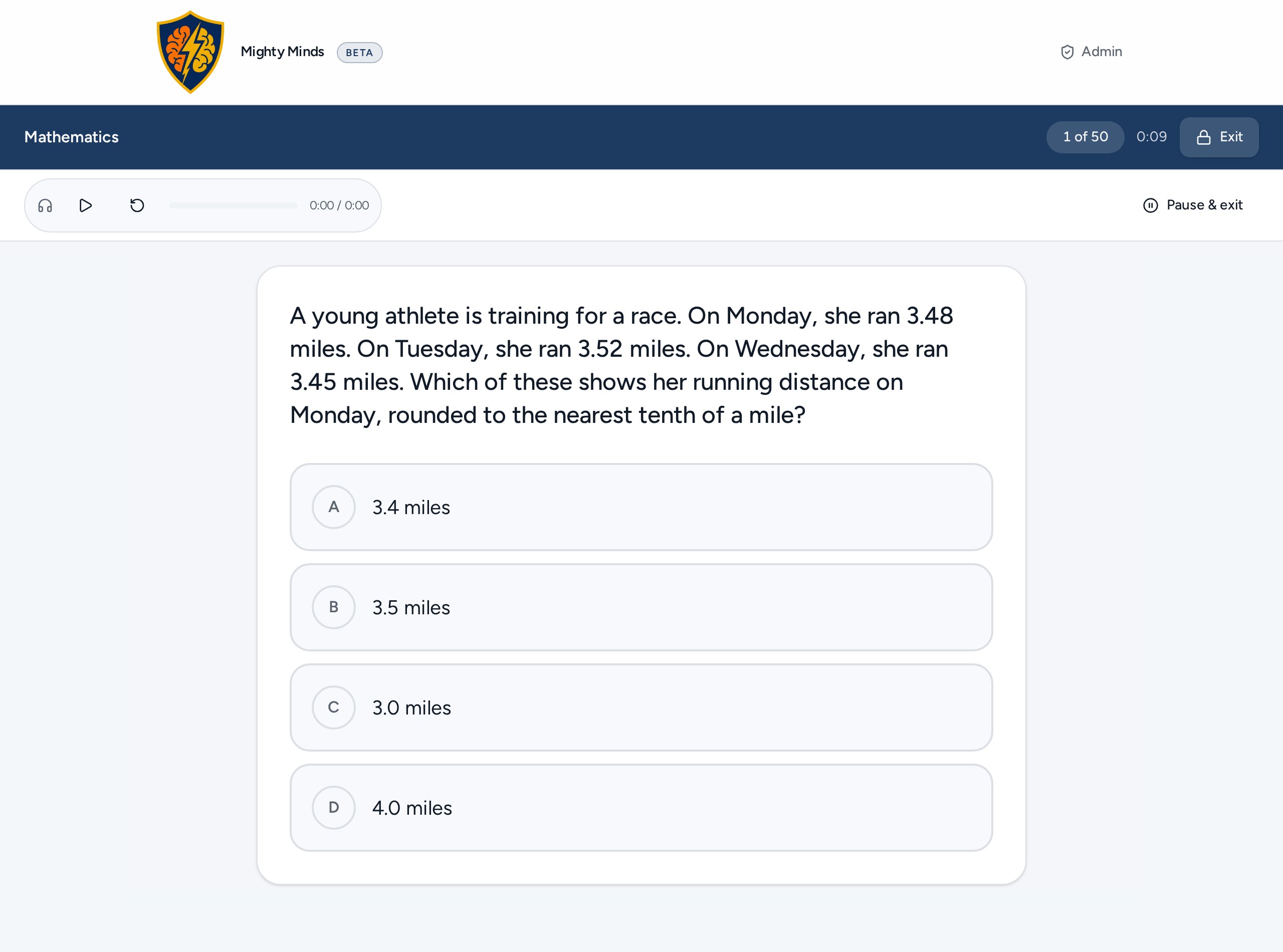
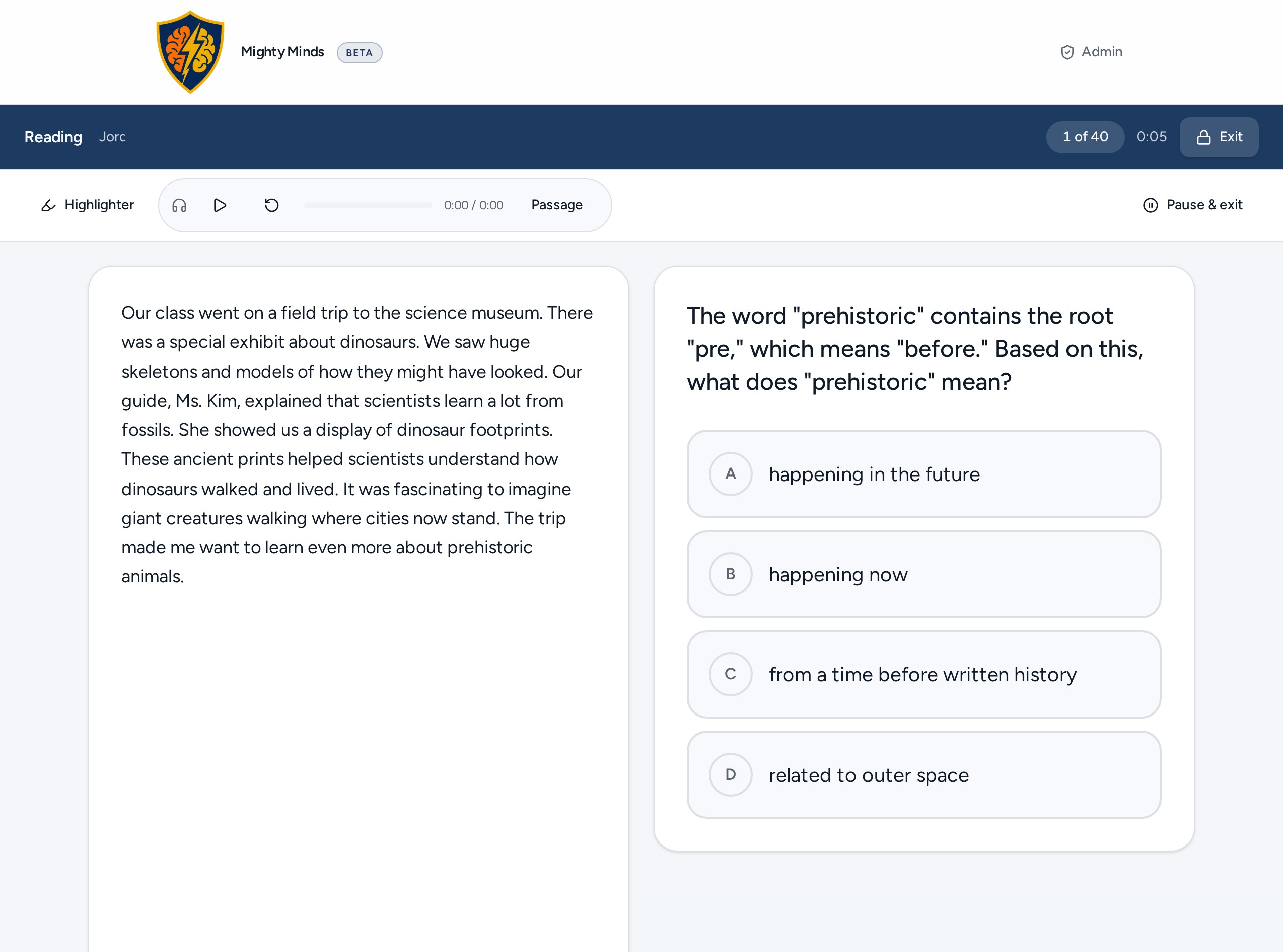
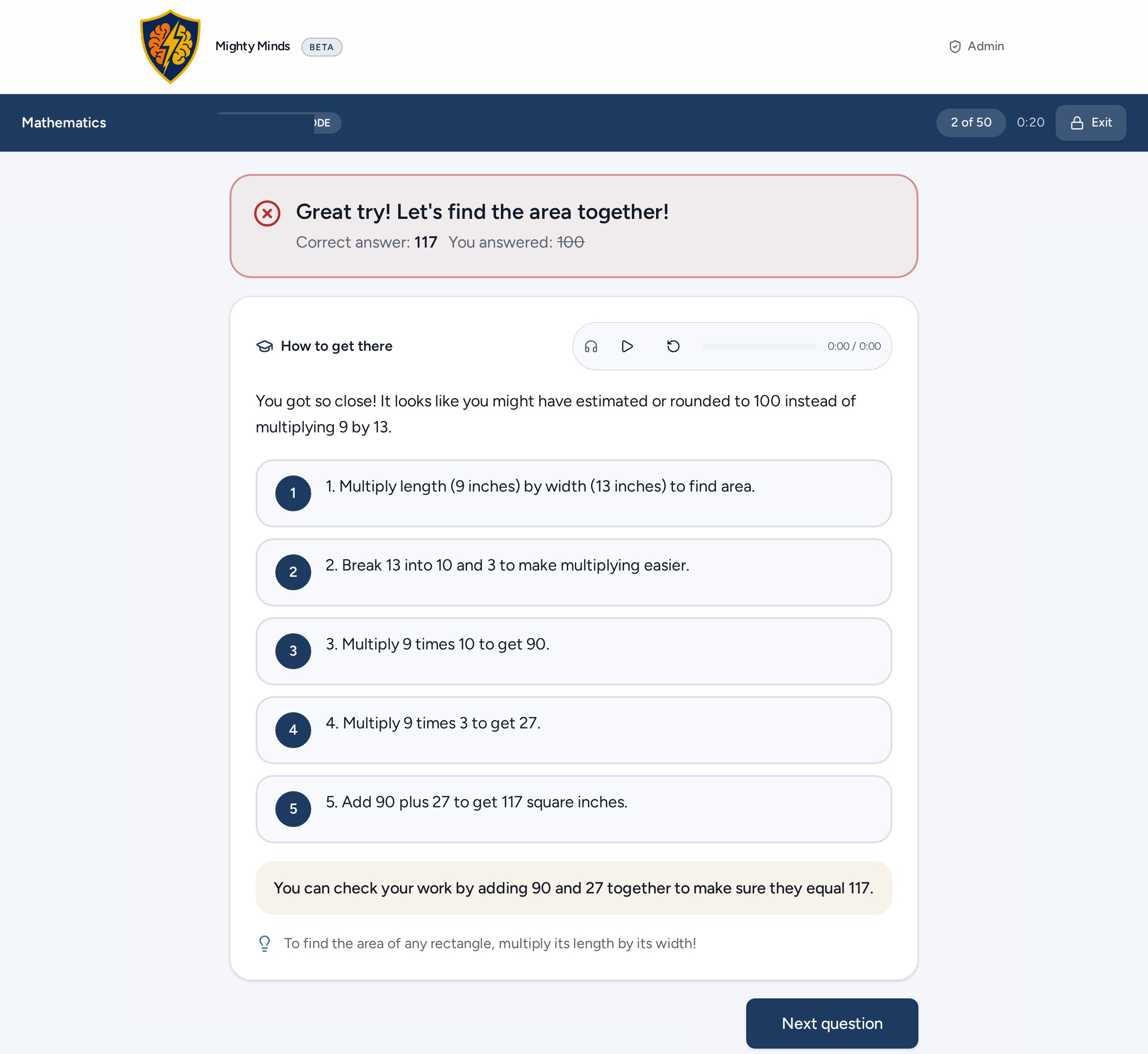
Real screens from a practice session — the adaptive mock test, a reading passage in Learning Mode, and the step-by-step AI explanation your child gets after a missed answer.
MAP scoring and progress tracking
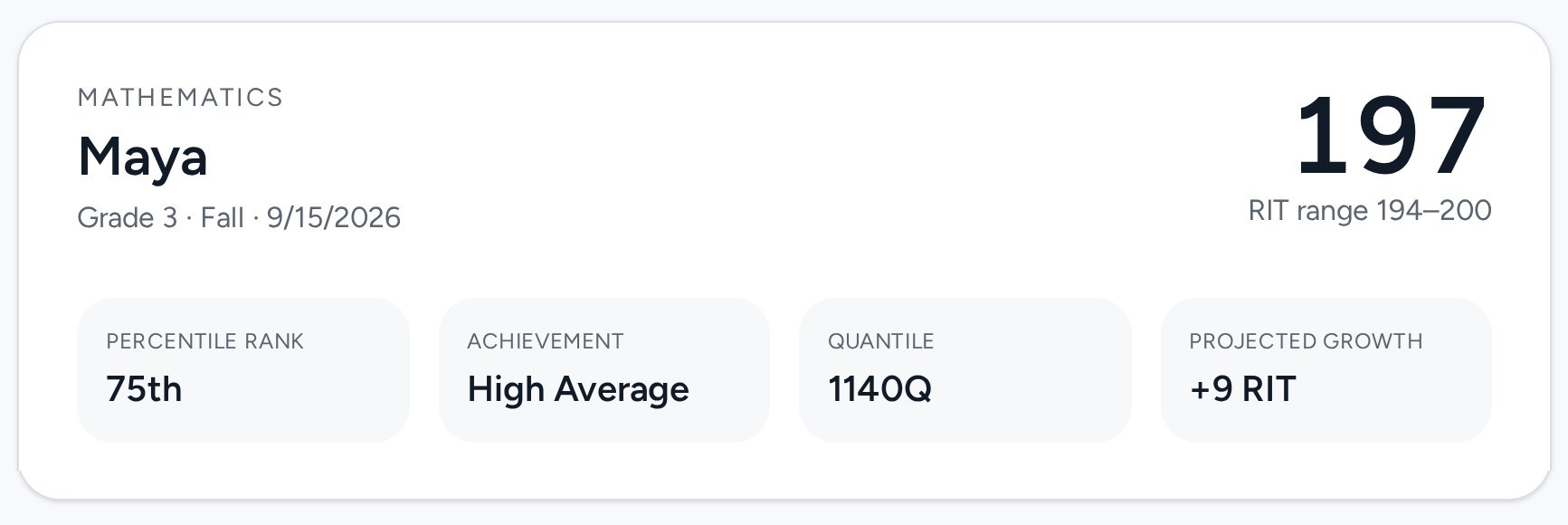
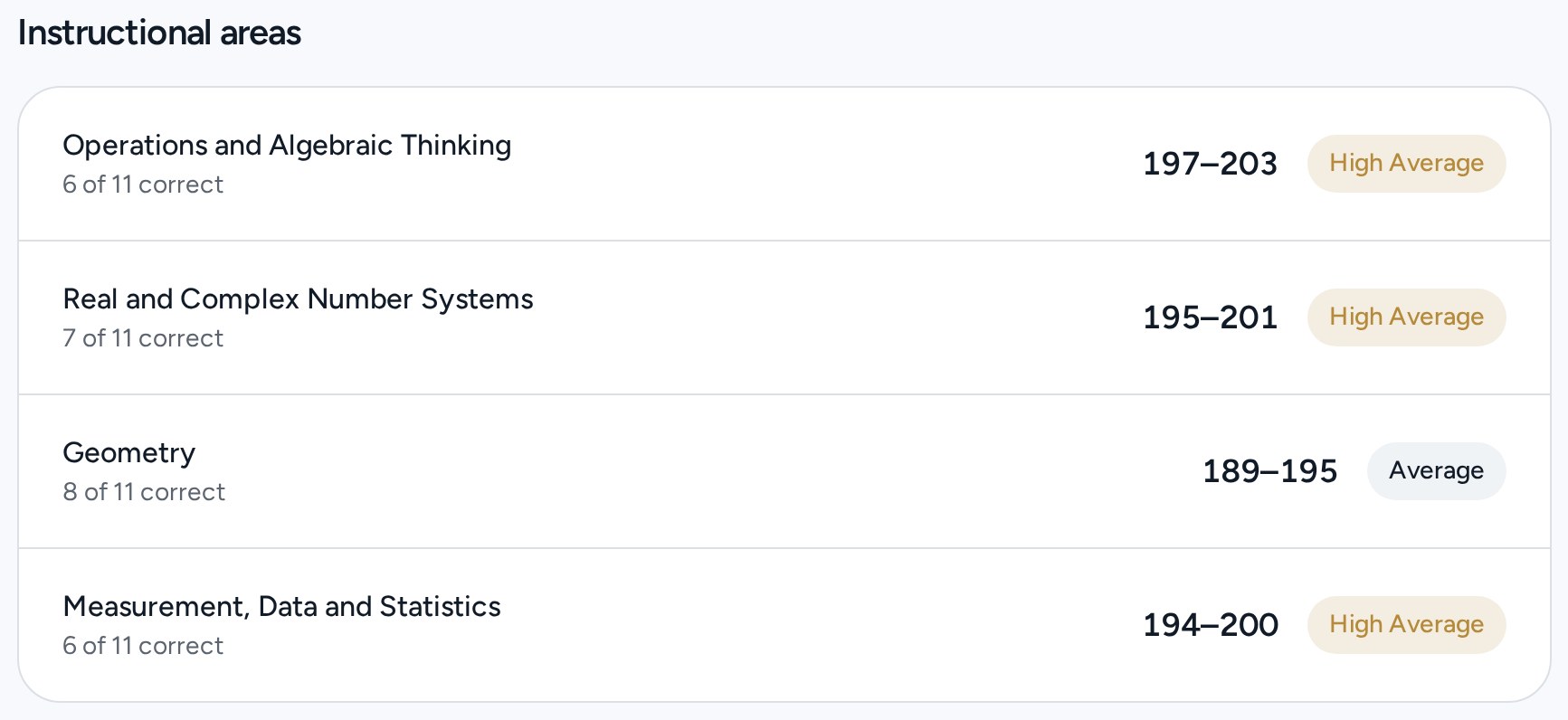
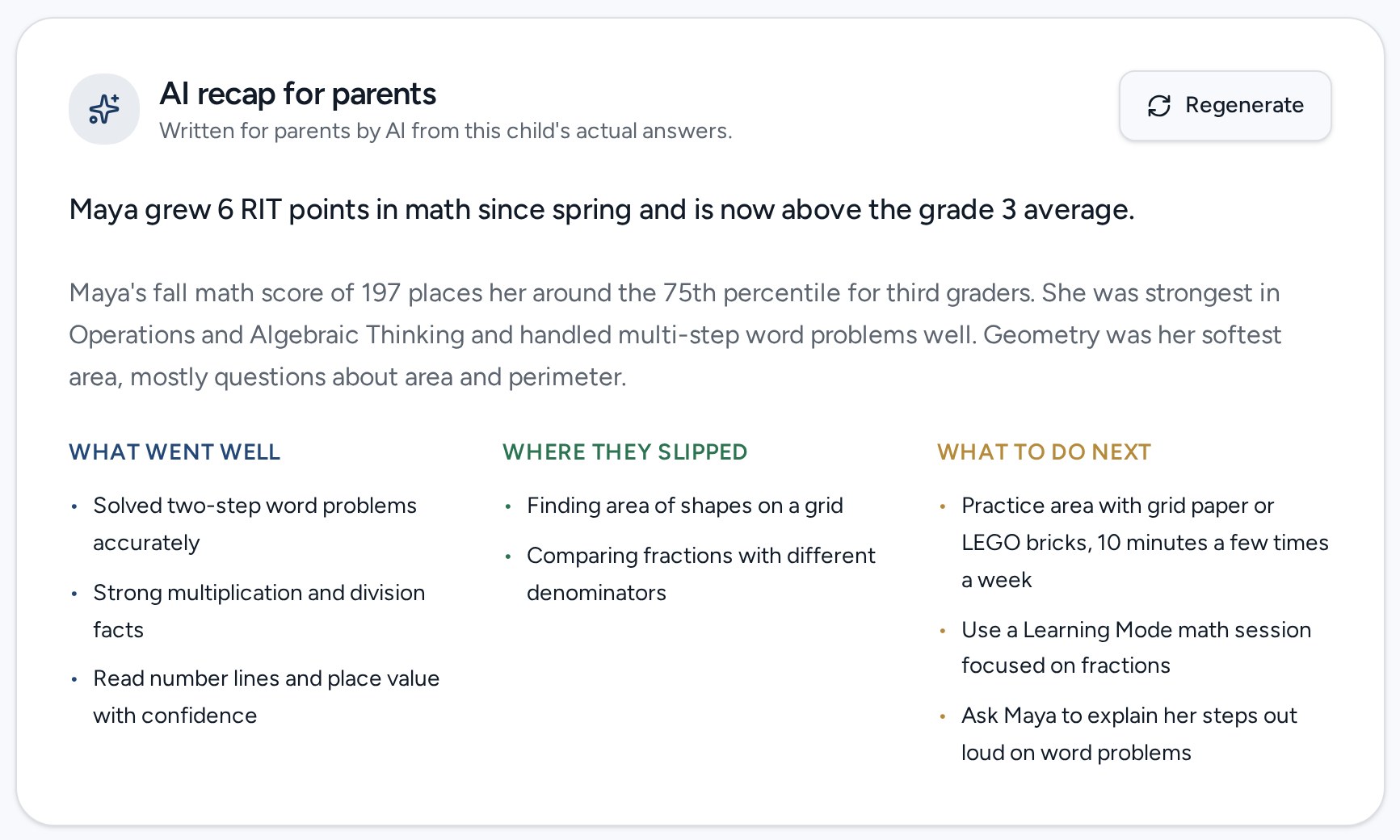
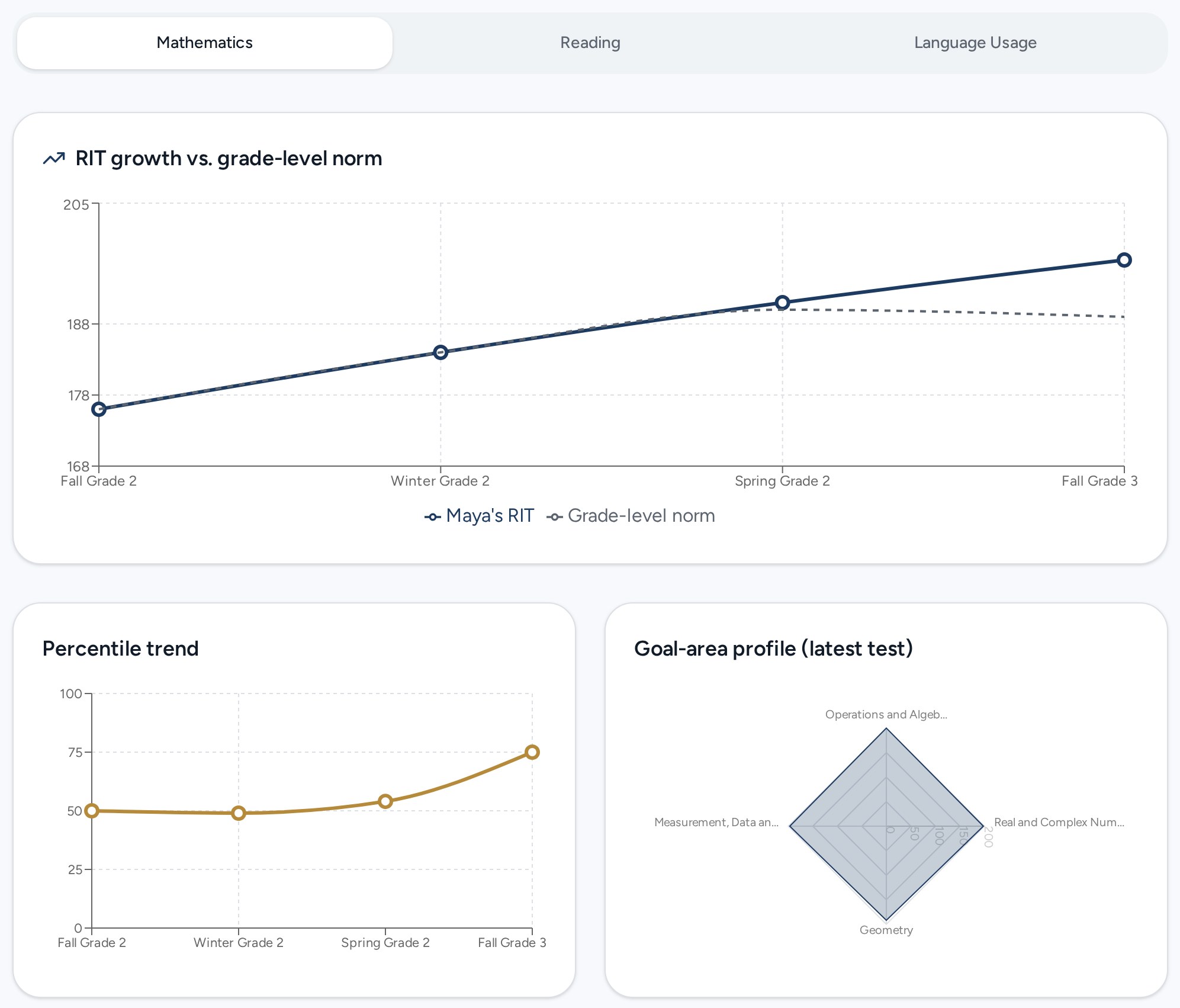
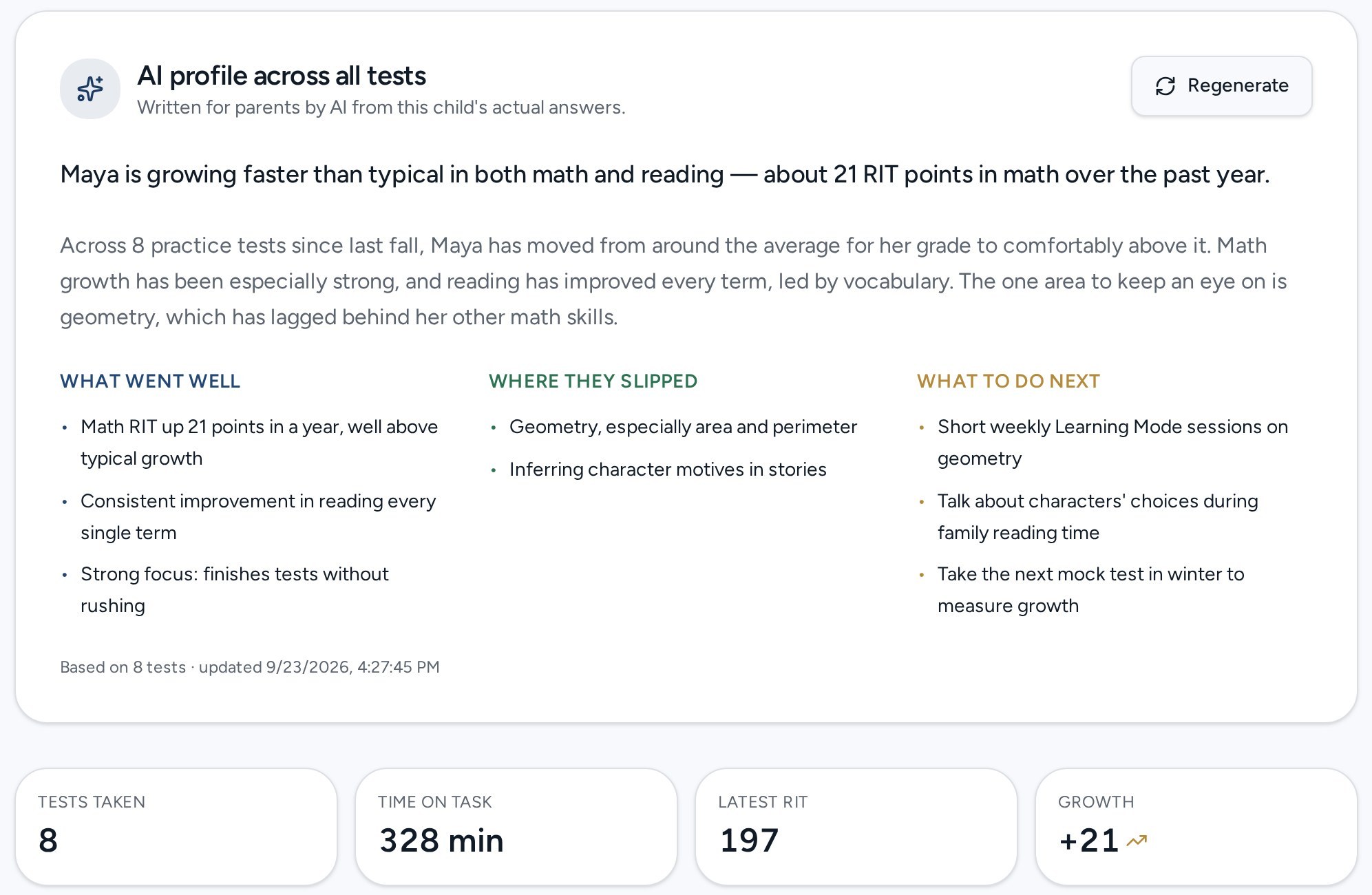
What parents see after each test (sample child shown). Kids never see these — they stay behind your parent PIN.
MAP Growth practice (grades K-12)
Two ways to run a MAP session: a faithful Mock test that mirrors the real MAP Growth experience, or Learning Mode that drops the scoreboard and teaches every miss.
Adaptive item selection
Items come from a Rasch-calibrated bank and are chosen near your child's current ability, so difficulty rises after correct answers and eases after misses — the same behavior as a computer-adaptive MAP Growth test.
RIT scores and percentiles
Each practice test ends with an overall RIT score and standard error, a percentile rank based on published status norms, instructional-area ranges, and projected growth for the next term.
The same testing routine
Full screen, one question at a time, no going back, untimed like the real test, with a parent PIN required to exit early so students finish the session.
Read-aloud support
Audio is built in for K-2 and available as an optional accommodation for grades 3-12, with play, pause, and start-over controls.
Learning Mode
Switch the session to Learning Mode and the scoreboard disappears. When your child misses a question, the AI explains in plain language what went wrong and how to reach the right answer — with optional read-aloud so younger kids can follow along by ear. No pressure, no score, just teaching.
AI parent summaries
After every session, a plain-language summary is written for parents from your child's actual answers — what went well, where they slipped, and what to do next — so you understand the report without decoding a chart.
Improvement plan
Each summary ends with concrete next steps tailored to the weak spots it found, and a running growth chart tracks whether those weak spots are turning into strengths over time.
MAP subjects and grade levels
Practice tests are available for kindergarten through grade 12 in three subjects. Grade level is suggested from your child's date of birth during setup and can be changed at any time.
- Math
- Operations and algebraic thinking, number and operations, measurement and data, and geometry, with numeric-entry and multiple-choice items and an on-screen calculator where it applies.
- Reading
- Literary and informational passages with vocabulary, main idea, and inference questions, plus a passage highlighter in the testing room.
- Language Usage
- Grammar, mechanics, usage, and writing-process items drawn from the same instructional areas schools report on.
Starting from your child's real scores
If your child has already tested at school, you can enter previous RIT scores by grade and term (fall, winter, or spring) when you create their profile. The adaptive engine uses that history as its starting point, so the very first practice test begins at a sensible difficulty instead of guessing. Every session afterward is stored on the child's profile with a timestamp, charted over time, and summarized in plain language for parents.
SAT & ACT prep (grades 8-12)
Full-length practice for the Digital SAT and the current ACT, with the same AI coaching parents already get for MAP.
Real format and timing
Digital SAT with two adaptive modules per section, and the ACT's English, Math, Reading, and optional Science sections, each on the official clock with auto-submit.
Testing tools
Built-in calculator, mark-for-review, and a check-your-work screen before each section ends.
Scaled scores and predictions
Every exam reports a scaled score, a predicted score range, and an SAT-to-ACT comparison so you can pick the better test.
AI study plan
Set a target score and test date; the plan rebuilds after every session, leading with the weakest skills and pacing habits.
Twenty minutes a day is the whole ask
Score gains come from short, frequent sessions rather than weekend marathons. A child or teen can see meaningful improvement with as little as twenty minutes a day on the platform, and the design protects those minutes: the adaptive engine keeps items at their level, Learning Mode teaches every miss as it happens, and the AI summary ends every session with one concrete next step. Nothing is spent deciding what to practice.
Built for iPad and phones
Large touch targets and a full-screen testing room for every test. Younger kids use a shared profile picker behind a parent PIN; high schoolers can have their own login to see their scores. Parents manage everything from one account and can invite a co-parent.
Start practicing
Create a parent account, add a profile for each child, and start MAP practice or SAT & ACT prep.
Get startedMighty Minds is an independent practice tool and is not affiliated with or endorsed by NWEA, the College Board, or ACT.